Uterine fibroids psychosomatics
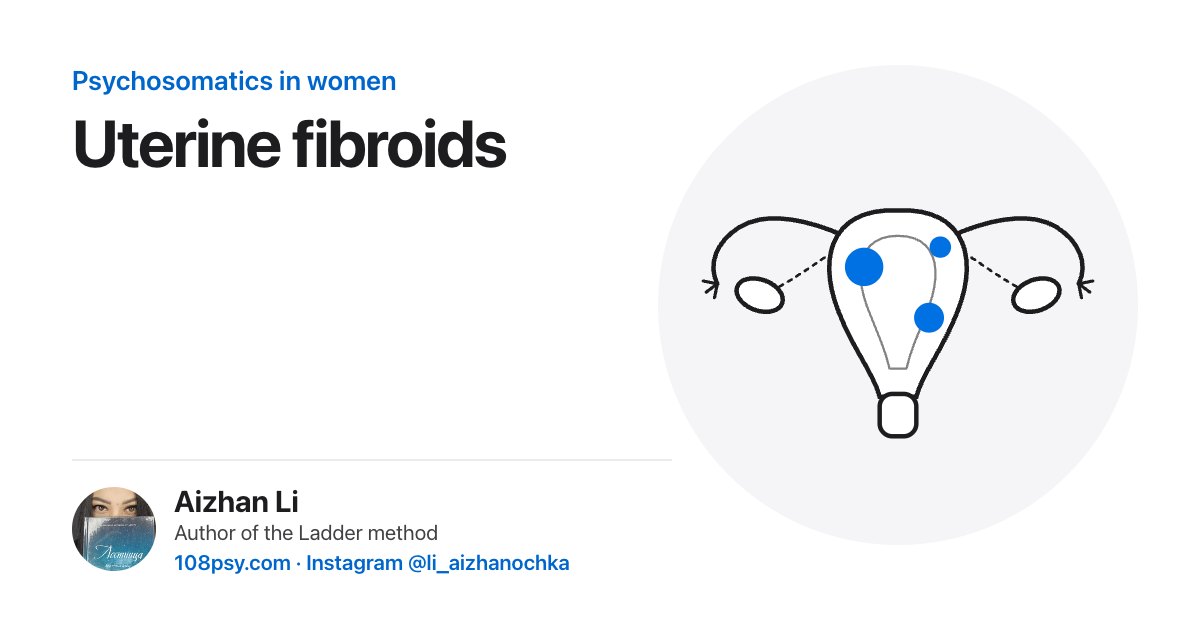
Uterine fibroids are common: a fibroid is a benign lump in the muscle wall of the uterus, and it often causes no symptoms for years. Fibroids are found on an ultrasound, and a gynecologist decides what to do about them. Heavy, long periods, heaviness in your lower belly, needing to pee often: these are reasons to book an appointment. Psychosomatics does not explain what causes fibroids. In the Ladder method, this topic becomes a reason to talk with yourself about motherhood.

Updated
When to see a doctor
Book a doctor’s appointment if you notice:
- Heavy, long periods
- Spotting between periods
- A dragging pain or heaviness in your lower belly
- Needing to pee often because of pressure on the bladder
- Your belly has grown even though your weight hasn't changed
A gynecologist makes the diagnosis, most often with an ultrasound.
What medicine knows
A fibroid grows from the muscle tissue of the uterus. There can be one or several, from the size of a pea to a size that changes the shape of your belly.
It's a benign growth and almost never turns into cancer. Fibroids grow under the influence of female hormones, so they usually shrink after menopause. The Russian Ministry of Health clinical guidelines (2024) link fibroid growth to heredity, hormones and growth factors, and also name stress and a weakened immune system among other factors.
According to the same guidelines, up to 70% of women of reproductive age have fibroids. They are the most common benign tumor of the female reproductive organs. On average, they're found at age 32–34, often during a routine ultrasound. According to the clinical protocol of the Ministry of Health of Kazakhstan (2016), fibroids cause no symptoms in 50–80% of women, and new cases peak at age 40–50.
About a quarter of women of reproductive age with fibroids have symptoms that need treatment. A gynecologist decides what to do: many fibroids are simply monitored.
In the Ladder method
In the Ladder method, fibroids are a reason to look at motherhood and at whatever has stayed unresolved around it. This is not an explanation of what causes a fibroid but a set of questions for yourself.
It might be an unfulfilled wish to have a baby: you want a child and your partner doesn't, or it just isn't happening. Or the opposite: a fear of getting pregnant, a pregnancy you ended, and feelings you never talked about.
Sometimes a woman lives through this theme not for herself but for her daughter or sister. What matters is not looking for someone to blame, but seeing which event and which fear are still holding you. Monitoring and treating the fibroid stay with your gynecologist.
These are questions for reflection, not an explanation of what causes the condition and not a treatment.
The topic in a short video
Made by AI (Gemini Notebook) from the text of this page. Watch on its own page ›
Frequently asked questions
Can emotional stress cause fibroids?
Fibroid growth is linked to heredity and female hormones. The Russian clinical guidelines also mention stress among the factors, but fibroids can't be cured by talking about feelings. In the Ladder method, this topic is a reason to look at what has stayed unresolved around motherhood.
What is the psychosomatic meaning of uterine fibroids?
Fibroids have no proven psychological meaning. In the Ladder method, they are a way into the theme of motherhood: an unfulfilled wish to have a baby, a fear of pregnancy, an ended pregnancy you never told anyone about. What matters is seeing the event and the fear that are still holding you, without looking for someone to blame.
Can fibroids go away if I work through the psychosomatic causes?
No one can promise that. A gynecologist decides what to do with a fibroid: many are simply monitored, some are treated or removed. The Ladder method's questions help with the tension you live with around children and motherhood.
See what is holding you back.
In 10 minutes, the Ladder shows past events, other people’s words and your fears on one map.
Take the free diagnosticFree · 10 minutes · on your phoneRelated topics
Psychosomatics does not replace tests and treatment. Only a doctor can make a diagnosis.