Endometriosis psychosomatics
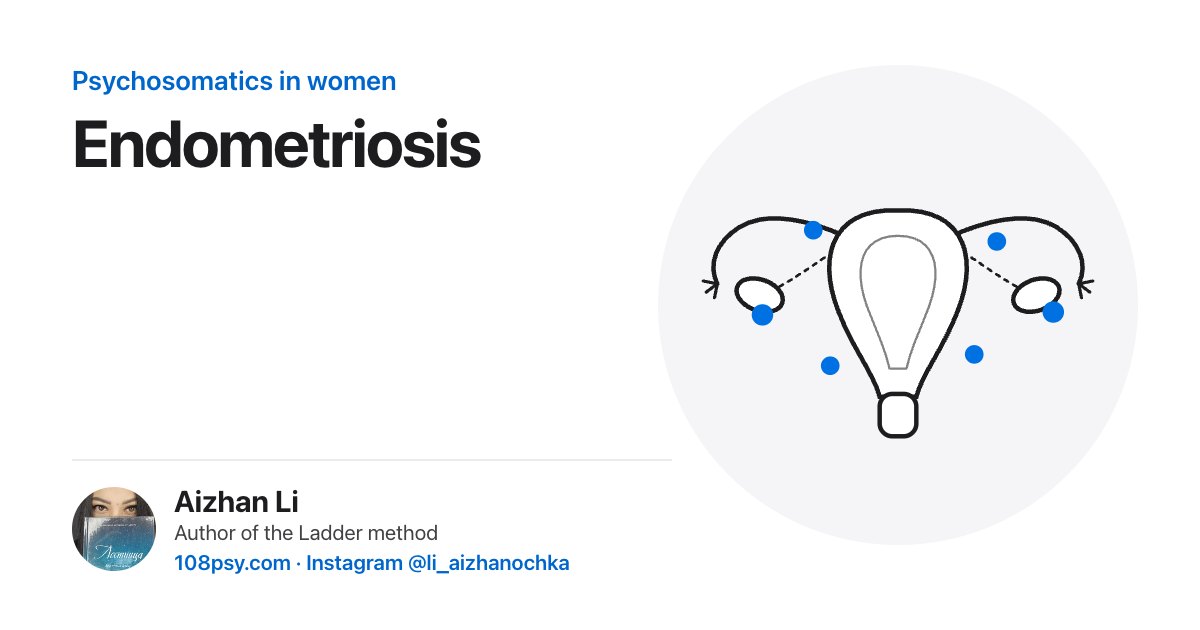
With endometriosis, tissue similar to the lining of the uterus grows outside it. The main sign is severe period pain that women accept as normal for years. According to the WHO, the causes of endometriosis are still unknown. A gynecologist makes the diagnosis with an exam, an ultrasound or an MRI, and if the pain gets in the way of your life, book an appointment. The Ladder method does not explain the illness; it helps you see where you've learned to bear pain in silence.

Updated
When to see a doctor
Book a doctor’s appointment if you notice:
- Very painful periods that get in the way of your life
- Pain during sex
- Constant pain in your lower belly
- Pain when you go to the toilet during your period
- Trouble getting pregnant
- Tiredness that doesn't go away
A gynecologist makes the diagnosis. This takes an exam, an ultrasound, and sometimes an MRI.
What medicine knows
The endometrium is the inner lining of the uterus, and it renews itself every month. With endometriosis, similar tissue appears on the ovaries, the fallopian tubes, the lining of the abdomen, and other organs.
This tissue also responds to your cycle, but it has no way out. That leads to inflammation, adhesions, and pain.
According to the Russian Ministry of Health clinical guidelines (2024), about one in ten women has endometriosis, mostly women of reproductive age. The World Health Organization estimates the number worldwide at 190 million.
According to the WHO, the causes of endometriosis are unknown, and emerging research links it to problems with the immune system. There is no cure yet, but pain and other symptoms are treated with medicines and sometimes surgery.
On average, it takes 7–10 years from the first symptoms to a diagnosis; the WHO puts it at 4 to 12 years. It takes so long because many women consider severe period pain normal.
The WHO also notes that endometriosis affects mental health: anxiety and depression are more common with it. That is why the Russian clinical guidelines recommend checking a woman's emotional state as well, and referring her to a medical psychologist if she has concerns.
In the Ladder method
In the Ladder method, endometriosis is a reason to look at pain you've learned to bear in silence. “Periods are supposed to hurt,” “stop whining,” “just put up with it,” and so on for years.
Another theme to reflect on is losing someone close, or the fear of losing them. A breakup, a move, losing a parent, a relationship that has gone cold.
This is not an explanation of the illness. These are questions about where you put up with pain and for what, and permission to talk about pain, including to your doctor.
These are questions for reflection, not an explanation of what causes the condition and not a treatment.
The topic in a short video
Made by AI (Gemini Notebook) from the text of this page. Watch on its own page ›
Frequently asked questions
Is there a psychosomatic side to endometriosis?
Medicine doesn't yet know what causes endometriosis; the WHO links it to problems with the immune system and does not list emotions among the causes. The opposite is known, though: endometriosis affects mental health, and anxiety and depression are more common with it. In the Ladder method, this topic is a way to look at pain a woman has learned to bear in silence.
Why does it take so long to diagnose endometriosis?
On average, it takes 7–10 years from the first symptoms to a diagnosis, and 4 to 12 years according to the WHO. Many women consider severe period pain normal for years: “just put up with it,” “it hurts for everyone.” If the pain gets in the way of your life, that's a reason to see a gynecologist.
How can a psychologist help with endometriosis?
Endometriosis is treated by a gynecologist. The Russian clinical guidelines recommend referring a woman to a medical psychologist if she feels anxious or low. Chronic pain is easier to live with when you have support and when you allow yourself to talk about pain, including to your doctor.
See what is holding you back.
In 10 minutes, the Ladder shows past events, other people’s words and your fears on one map.
Take the free diagnosticFree · 10 minutes · on your phoneRelated topics
Psychosomatics does not replace tests and treatment. Only a doctor can make a diagnosis.