Genital warts psychosomatics
Genital warts, or condylomas, are soft growths on the genitals. They are caused by the human papillomavirus, HPV.
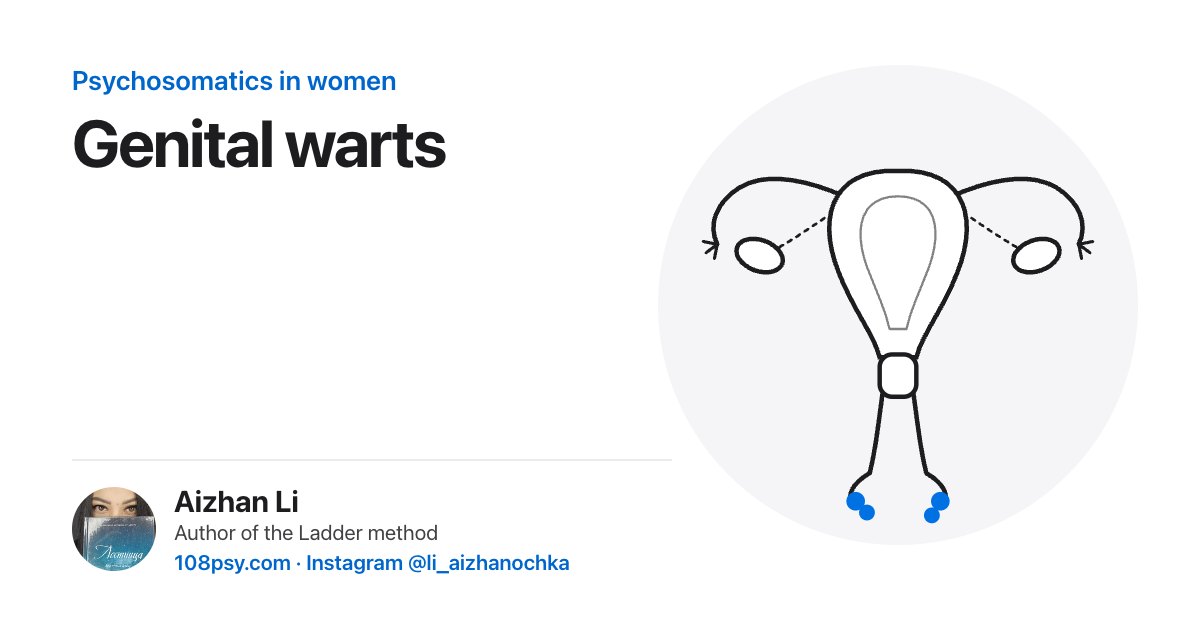

Updated
What psychosomatics says
Genital warts are caused by a virus. Psychosomatics looks at something else: why your immune system isn't coping right now and what is making you vulnerable.
Shame and the feeling of being “dirty” often come with them, especially if the warts appeared after a new relationship or a partner's cheating.
Psychosomatics helps you separate the diagnosis from shame and get back respect for your body.
What it is
HPV spreads through intimate contact and is very common. According to the World Health Organization, in 90% of people the body clears this infection on its own.
Genital warts are caused by low-risk types of the virus. According to the Russian Ministry of Health clinical guidelines (2024), up to 90% of cases are linked to HPV types 6 and 11. A doctor removes the warts.
Other, high-risk types affect the cervix, so it's important for women to have regular smear tests.
There is a vaccine against the most dangerous types of HPV. WHO recommends giving it to girls aged 9–14, before they become sexually active.
How it shows up
- Soft, skin-colored or pink growths
- Itching, discomfort
- Sometimes nothing bothers you at all
A gynecologist or a sexual health doctor (dermatovenereologist) makes the diagnosis.
Frequently asked questions
What causes genital warts?
They're caused by the human papillomavirus, HPV. It spreads through close contact of skin and mucous membranes, including sex. It's one of the most common infections, and there's no need to be ashamed of it.
If I have genital warts, does it mean my partner cheated?
Not necessarily. HPV can live in the body unnoticed for years, so genital warts can't tell you exactly when or from whom the virus came.
What is the psychosomatic meaning of genital warts?
Psychosomatics looks at why your immune system isn't coping right now and what is making you vulnerable. Shame and the feeling of being “dirty” often come with them. It's important to separate the diagnosis from shame and get back respect for your body.
Sources
- Клинический протокол «Аногенитальные (венерические) бородавки». Министерство здравоохранения Республики Казахстан, 2024
- Клинические рекомендации «Аногенитальные (венерические) бородавки». Минздрав России, Российское общество дерматовенерологов и косметологов, Российское общество акушеров-гинекологов, 2024
- Вирус папилломы человека и рак. Информационный бюллетень Всемирной организации здравоохранения, 2024
See what is holding you back.
In 10 minutes, the Ladder shows past events, other people’s words and your fears on one map.
Take the free diagnosticFree · 10 minutes · on your phoneRelated topics
Psychosomatics does not replace tests and treatment. Only a doctor can make a diagnosis.