Thrush (yeast infection) psychosomatics
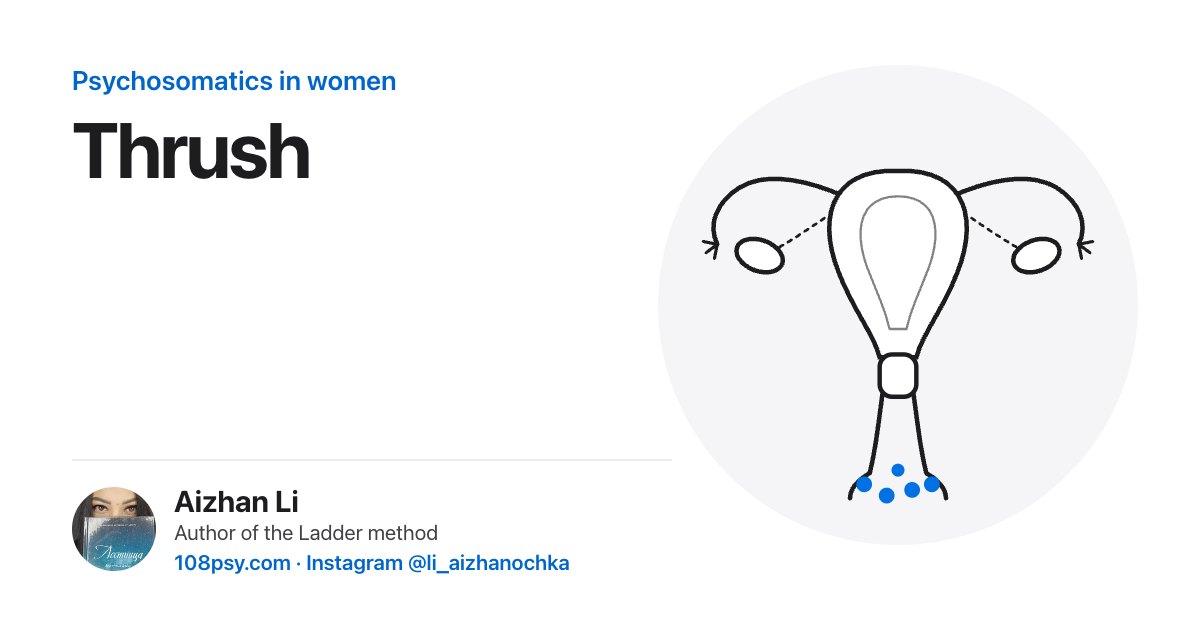
Thrush is a fungal infection of the vagina, also called a yeast infection. About three in four women get it at least once in their life.

Updated
What psychosomatics says
In psychosomatics, thrush is linked to intimacy. To how you really feel about sexual contact.
Sometimes you don't want intimacy but agree because you feel you “have to.” Sometimes it's the other way around: you want intimacy, and it isn't there. Either way, what you want and what you have don't match.
Often there's also irritation with your partner that's hard to say out loud. Psychosomatics helps you see this without shame or guilt.
What it is
The Candida fungus lives in the bodies of many healthy women without causing any trouble. Thrush starts when it multiplies more than usual.
Common triggers are antibiotics, hormonal changes, pregnancy, a weakened immune system, and high blood sugar. Thrush isn't considered a sexually transmitted infection in the strict sense.
For many women, it comes back. According to the US Centers for Disease Control and Prevention, 40–45% of women get thrush two or more times.
According to the Russian Ministry of Health clinical guidelines (2025), if thrush comes back three or more times a year, it's called recurrent. This happens in up to 20% of cases. It's a reason to get checked, not just to treat it with suppositories again.
How it shows up
- Itching and burning
- White, cottage cheese-like discharge
- Redness and swelling
- Discomfort when you pee and during sex
A gynecologist makes the diagnosis based on an exam and a swab.
Frequently asked questions
Can stress cause thrush?
Thrush is caused by Candida fungi. Most often, antibiotics, hormonal changes, and a weakened immune system help it flare up. Psychosomatics looks at what's happening in your intimate life at that time.
Why does thrush keep coming back?
Recurring thrush is worth getting checked by a gynecologist: sometimes blood sugar, hormones, or unfinished treatment are behind it. In psychosomatics, it's linked to intimacy where what you want and what you have don't match, and to irritation with your partner that's hard to say out loud.
How does psychosomatics help with thrush?
It helps you answer honestly what kind of intimacy you want and learn to tell your partner about it. Without shame or guilt. Treatment is still prescribed by a gynecologist.
Sources
- Клинический протокол «Воспалительные заболевания промежности, вульвы и влагалища (бартолинит, вульвит, вагинит)». Министерство здравоохранения Республики Казахстан, 2016
- Клинические рекомендации «Воспалительные болезни шейки матки, влагалища и вульвы». Минздрав России, Российское общество акушеров-гинекологов, 2025
- Vulvovaginal Candidiasis. STI Treatment Guidelines. Центры по контролю и профилактике заболеваний США (CDC), 2021
See what is holding you back.
In 10 minutes, the Ladder shows past events, other people’s words and your fears on one map.
Take the free diagnosticFree · 10 minutes · on your phoneRelated topics
Psychosomatics does not replace tests and treatment. Only a doctor can make a diagnosis.