Vaginismus psychosomatics
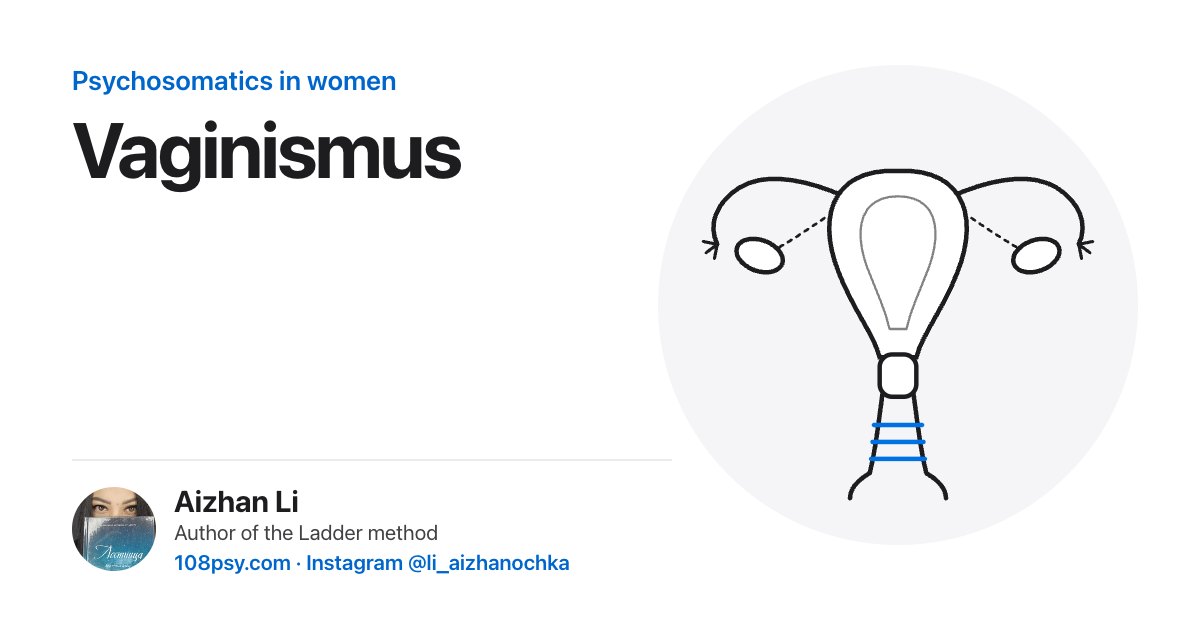
Vaginismus is an involuntary spasm of the vaginal muscles. Because of it, sex, a gynecological exam or a tampon cause pain or become impossible.

Updated
What psychosomatics says
In psychosomatics, vaginismus is the body saying “no” when your voice stays silent. It protects you from penetration that, deep down, you don't want or are afraid of.
Behind it there may be a painful first experience, sex against your will, or an upbringing where sex was talked about as dirty and sinful.
It's important to know: this is not your fault. Psychosomatics helps you gently find what your body is protecting you from, and give it back a sense of safety.
What it is
A woman can't control this spasm: the body tightens on its own, as protection. Fear of pain often joins in and makes the spasm stronger.
According to the UK National Health Service (NHS), vaginismus is more common in girls and women from their late teens to their early 30s. The causes vary: a painful first experience, a strict upbringing where sex was talked about with shame, past abuse, fear of pregnancy, inflammation.
Doctors diagnose it when pain during penetration, fear of it, or muscle tightening lasts at least 6 months and seriously gets in the way of your life. That's how the MSD Manual describes it.
Vaginismus responds well to help. A gynecologist, a sex therapist and a psychologist work with it, and pelvic floor exercises help.
How it shows up
- Sex is impossible or very painful
- You can't insert a tampon
- A gynecological exam makes you panic
- Fear and tension at the thought of intimacy
A gynecologist, a sex therapist and a psychologist can help.
Frequently asked questions
Is vaginismus psychological?
Often, yes: the body tightens in response to fear of pain or a past painful experience. But first a gynecologist rules out other causes of pain. A gynecologist, a sex therapist and a psychologist help together.
Is it my fault that I have vaginismus?
No. No one chooses vaginismus or makes it up. Your body is protecting you from what you fear or don't want. It needs to get its sense of safety back gently, without pressure.
Can vaginismus be treated?
Yes. The UK National Health Service (NHS) lists psychological support, pelvic floor exercises and gradually getting used to vaginal dilators among the options.
Sources
See what is holding you back.
In 10 minutes, the Ladder shows past events, other people’s words and your fears on one map.
Take the free diagnosticFree · 10 minutes · on your phoneRelated topics
Psychosomatics does not replace tests and treatment. Only a doctor can make a diagnosis.