Ovary psychosomatics
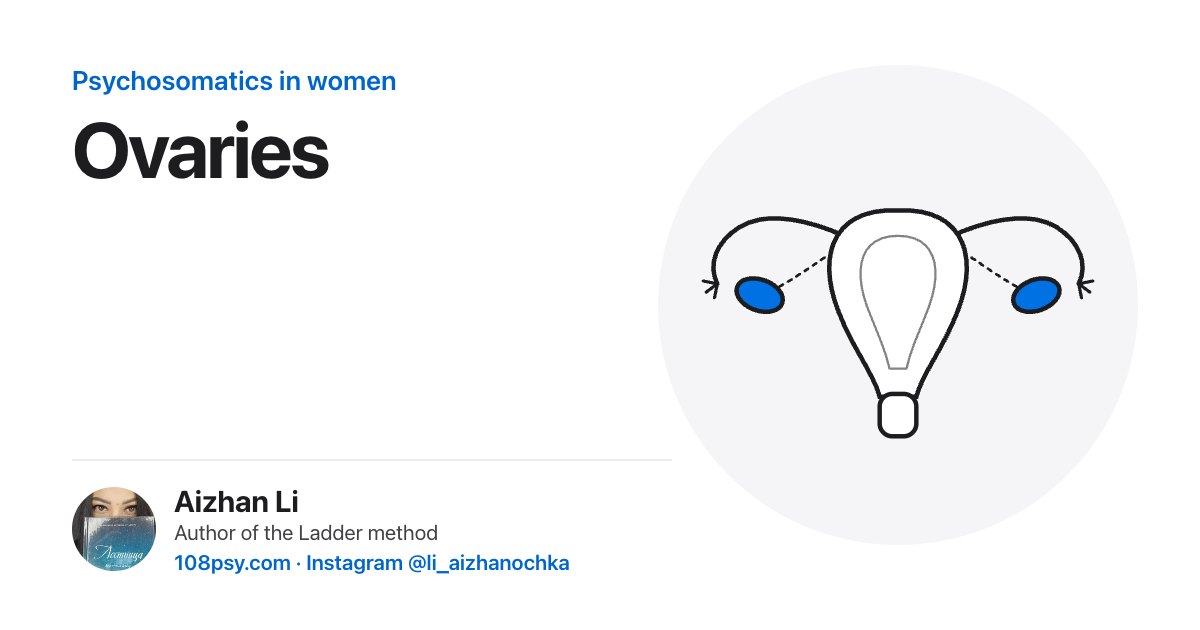
The ovaries are two small glands where eggs mature and female hormones are made. Your cycle, pregnancy and how you feel all depend on them.

Updated
What psychosomatics says
In psychosomatics, the ovaries are linked to loss and the fear of loss. Someone close to you left, died, moved away or drifted apart emotionally.
Another theme is continuing the family line. Do I want children, can I carry them, what will happen to them.
Psychosomatics helps you see what loss you're carrying and what keeps you from letting it go.
What it is
Every month a follicle matures in the ovary. An egg is released from it, and in its place a corpus luteum forms, which produces progesterone.
The most common ovarian problems are cysts, polycystic ovaries, endometriosis, inflammation and ovulation problems.
According to the World Health Organization, polycystic ovary syndrome affects 10–13% of women of reproductive age, and up to 70% of them don't know they have it. It's the most common reason ovulation doesn't happen.
Ovarian function is checked with ultrasound and hormone tests on certain days of the cycle.
How it shows up
- Cycle problems
- Pain on one side of the lower belly
- Trouble getting pregnant
- Acne, hair growth on the face and body
- Often no signs at all
A gynecologist or gynecologic endocrinologist makes the diagnosis.
Frequently asked questions
What do the ovaries mean in psychosomatics?
The ovaries are linked to loss and the fear of loss: someone close to you left, died, moved away or drifted apart emotionally. Another theme is continuing the family line: do I want children, can I carry them, what will happen to them.
What are the most common ovary problems?
Cysts, polycystic ovary syndrome, and inflammation of the ovaries together with the fallopian tubes, called adnexitis. PCOS is one of the common causes of irregular periods and trouble getting pregnant. A gynecologist or gynecologic endocrinologist deals with this.
How can psychosomatics help with ovary problems?
It helps you see the loss you're carrying and live through it fully. Treatment and monitoring stay with your doctor.
Sources
See what is holding you back.
In 10 minutes, the Ladder shows past events, other people’s words and your fears on one map.
Take the free diagnosticFree · 10 minutes · on your phoneRelated topics
Psychosomatics does not replace tests and treatment. Only a doctor can make a diagnosis.