Psychosomatics of shingles
Shingles (herpes zoster) is caused by the chickenpox virus, which stays in the body and can wake up when your immune system is weakened, including by stress. The rash is painful and usually appears as a band on one side of the body. See a doctor first: antiviral treatment works best if started within 3 days of the rash appearing. If the rash is on your face near your eye or nose, see a doctor the same day. The Ladder method asks where you reached your limit.

Updated
When to see a doctor
Book a doctor’s appointment if you notice:
- Burning, tingling or pain in one area of skin before the rash
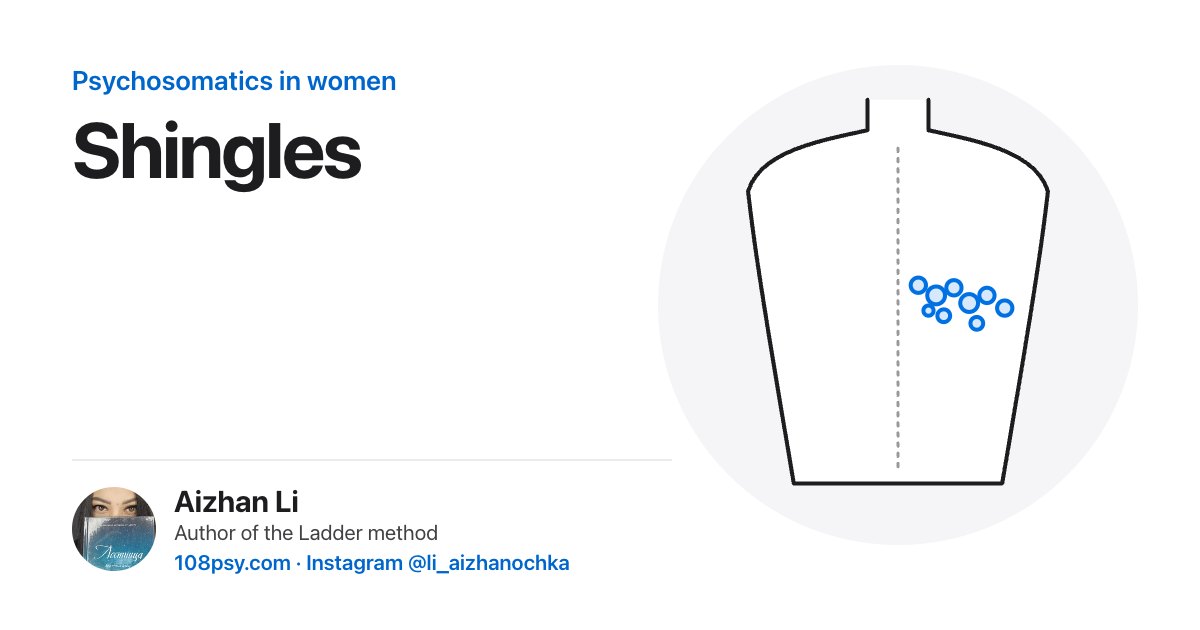
- A rash in a band on one side of the body, often on the chest, tummy or back
- Blotches turn into itchy blisters, then scabs
- Headache, feeling unwell, fever
- Pain gets worse with touch and clothing
- Pain stays after the rash has gone
Start with a GP, dermatologist or infectious disease doctor. According to the NHS, antiviral tablets work best if you start them within 3 days of the rash appearing. If you have severe pain after the rash, you need a neurologist.
What medicine knows
The Kazakhstan Ministry of Health clinical protocol (2015) defines shingles as an infectious disease caused by the zoster virus from the herpes family. It is the same virus that causes chickenpox: after the illness it stays in the body and can be reactivated if the immune system is weakened. The NHS names stress, certain conditions and treatments such as chemotherapy among the reasons.
The first signs can be tingling or pain in an area of skin, a headache and feeling unwell, and a rash appears a few days later (NHS). The protocol describes a temperature of up to 38 to 40 °C, chills and burning, shooting pain along the affected nerves. The rash is usually on the chest and tummy, on one side of the body only, and the blotches turn into itchy blisters that later dry into scabs.
The rash can take up to 4 weeks to heal, and the skin can stay painful for weeks after it. The most common complication, post-herpetic neuralgia, is pain that lasts for months after the rash. The risk of complications is lower if treatment starts as early as possible (NHS).
You cannot catch shingles from another person. But someone who has not had chickenpox or the vaccine can catch chickenpox from you while the blisters ooze. That is why the NHS advises staying away from pregnant women who have not had chickenpox, people with a weakened immune system and babies under 1 month old. There is a vaccine that lowers the risk of getting shingles.
In the Ladder method
In the Ladder method shingles is not explained by “conflicts”: it is a virus, and a doctor treats it. But medicine itself links its reawakening to a weakened immune system, and the Kazakhstan Ministry of Health protocol mentions stress among the circumstances before the illness. So it helps to ask yourself what you have been through in recent months.
It often comes after a stretch when you carried everything on your own for a long time: a loved one's illness, a divorce, a move, work with no days off. Or after a blow you did not expect from your own people. It is as if the body says the reserves have run out.
On the ladder this shows up as steps made of overload and hurts there was no time to live through. You can take them apart once the acute stage is over. A doctor prescribes treatment and pain relief.
These are questions for reflection, not an explanation of what causes the condition and not a treatment.
Frequently asked questions
Can shingles be caused by stress?
The NHS says the chickenpox virus is reactivated when the immune system is weakened and names stress among the reasons. The Kazakhstan Ministry of Health protocol also mentions stress in the history of the illness. But it is the virus that needs treating, not just your nerves: see a doctor in the first days.
Is shingles contagious?
Nobody can catch shingles from you, but a person who has not had chickenpox or the vaccine can catch chickenpox from you while the blisters ooze. Until the rash has dried, cover it with loose clothing and stay away from pregnant women, babies and people with a weakened immune system (NHS).
Why does the skin hurt for so long?
The virus affects a nerve, so the skin can hurt for weeks after the rash. If the pain lasts for months, it is post-herpetic neuralgia, the most common complication. It can be treated, and a doctor, sometimes a neurologist, chooses the pain relief.
See what is holding you back.
In 10 minutes, the Ladder shows past events, other people’s words and your fears on one map.
Take the free diagnosticFree · 10 minutes · on your phoneRelated topics
Psychosomatics does not replace tests and treatment. Only a doctor can make a diagnosis.