Psychosomatics of heartburn and acid reflux
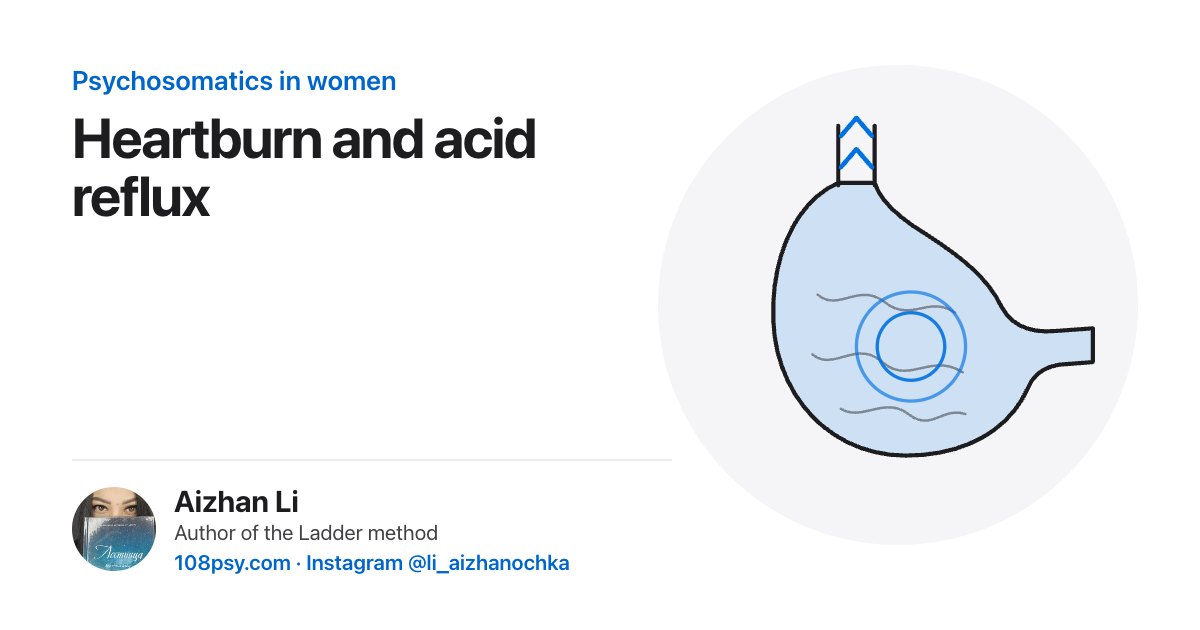
A burning feeling behind the breastbone and a sour taste in the mouth, especially after eating or lying down. This is heartburn: stomach acid travels up into the gullet. If it happens often, it’s called reflux disease, and a doctor treats it.

Updated
What psychosomatics says
Psychosomatics doesn’t explain why reflux happens. It has physical causes, and you’re not to blame for the acid rising. A doctor chooses the treatment.
In psychosomatics, the stomach is linked to what we “swallow” and “digest”: words, hurts, other people’s decisions we don’t agree with. Heartburn is talked about as a state where something was swallowed and can neither be spat out nor accepted.
The NHS names stress and anxiety among things that make reflux worse, so questions to yourself are fitting here. They don’t replace a gastroenterologist, they go alongside.
What it is
Heartburn is a burning feeling in the middle of the chest that appears when stomach acid travels up towards the throat (acid reflux). According to the NHS, the main symptoms are a burning sensation behind the breastbone and an unpleasant sour taste in the mouth. You may also have a cough or hiccups that keep coming back, a hoarse voice, bad breath, bloating and nausea. It’s often worse after eating, when lying down and when bending over.
Lots of people get heartburn from time to time, often for no obvious reason. MedlinePlus explains the mechanism: the muscle at the bottom of the gullet doesn’t close properly and stomach contents move back up. If symptoms happen twice a week or more, or damage the lining of the gullet, it is gastro-oesophageal reflux disease (GERD).
It can be caused or made worse by certain foods and drinks (coffee, tomatoes, alcohol, chocolate, fatty and spicy food), being overweight, smoking, pregnancy, some medicines (for example anti-inflammatory painkillers), a hiatus hernia, a stomach ulcer or a bacterial infection in the stomach. The NHS also names stress and anxiety and shifts in hormones such as progesterone and oestrogen.
Smaller, more frequent meals, no food 3 to 4 hours before bed, clothes that aren’t tight at the waist, the head of the bed raised by 10 to 20 cm (not with extra pillows) and giving up smoking all help. Antacids and alginates ease symptoms for a while and shouldn’t be taken regularly. If heartburn happens almost every day, a doctor will rule out other causes.
How it shows up
- Burning behind the breastbone after eating
- A sour or bitter taste in the mouth
- Worse when lying down and bending over
- A cough, hoarseness or hiccups that keep coming back
- Bloating and nausea
- Heartburn after coffee, spicy or fatty food or alcohol
Start with a general practitioner or a gastroenterologist. They’ll find out whether there is an ulcer, hernia or infection and choose treatment. If heartburn is almost daily or doesn’t go away after changes in diet and pharmacy remedies, don’t put the visit off.
Frequently asked questions
Can heartburn come from nerves?
The NHS names stress and anxiety among factors that can cause or worsen heartburn, but not the only cause. Often there is no obvious reason. If heartburn keeps coming back, see a doctor.
How does heartburn differ from reflux disease?
According to MedlinePlus, lots of people have reflux from time to time. If symptoms happen twice a week or more, or damage the lining of the gullet, it is called GERD. A doctor makes the diagnosis.
How can I tell heartburn from heart pain?
Heartburn burns behind the breastbone, especially after eating, when lying down and when bending, and often comes with a sour taste in the mouth. A pressing chest pain with shortness of breath, a cold sweat or pain in the arm, neck or jaw needs an ambulance: call 103. If you’re unsure, don’t wait.
Sources
See what is holding you back.
In 10 minutes, the Ladder shows past events, other people’s words and your fears on one map.
Take the free diagnosticFree · 10 minutes · on your phoneRelated topics
Psychosomatics does not replace tests and treatment. Only a doctor can make a diagnosis.