Psychosomatics of hemorrhoids
Blood on the toilet paper, itching, a feeling that you haven’t fully emptied your bowels. Hemorrhoids are awkward to talk about even with a doctor, yet they’re one of the most common complaints.

Updated
What psychosomatics says
In psychosomatics, hemorrhoids are linked to doubts about where you belong. You don’t know which decision to make or whose side to join. Stay or leave, stick with your own family or your husband’s, choose one person or the other.
Often these are situations where you’re made to feel like an outsider. Your husband’s relatives decide important things without you, say “this only concerns our own,” and you don’t know where your place is.
Another theme: anger with nowhere to go when someone invades your territory. After giving birth, there’s also a new role you haven’t found yourself in yet. Psychosomatics helps you see where you’re stuck between two shores and choose your own.
What it is
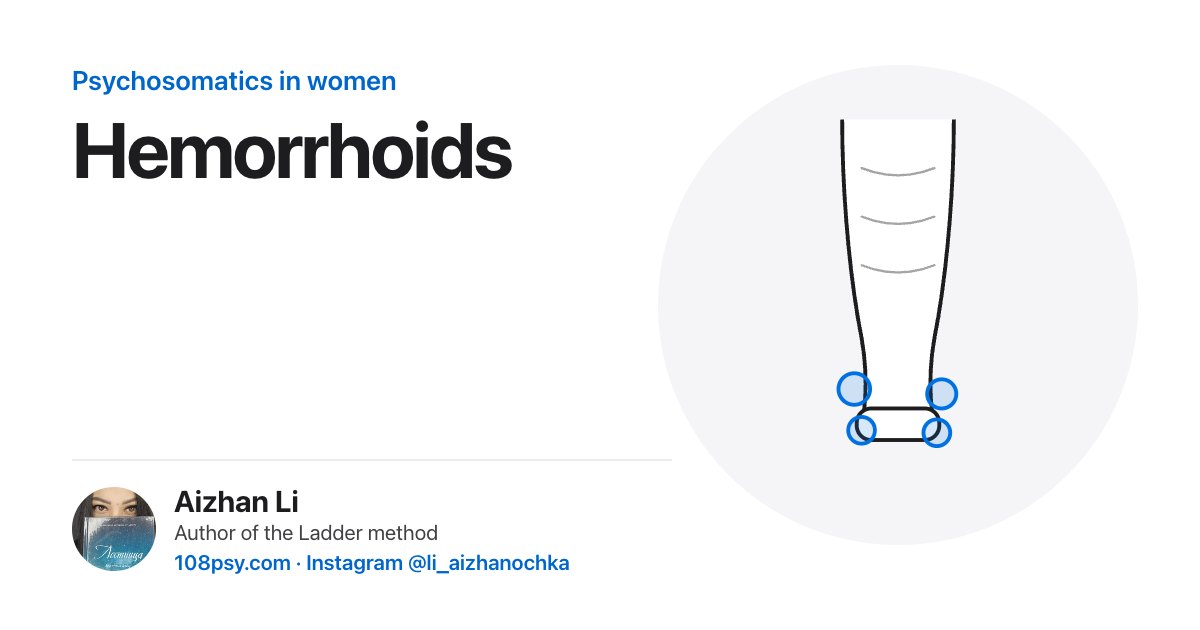
With hemorrhoids, the blood vessels in the anus and the lower rectum become swollen. The UK’s National Health Service (NHS, 2026) says the exact cause is unclear, but it’s known what makes them more likely.
That’s constipation, straining hard on the toilet, heavy lifting and being overweight. The risk grows with age, and during pregnancy and after giving birth many women get hemorrhoids. There’s nothing to be ashamed of.
According to the US National Institute of Diabetes and Digestive and Kidney Diseases (NIDDK), about one in twenty people have hemorrhoids, and after 50 about half of adults do.
Bleeding from the anus doesn’t only happen with hemorrhoids. So if it shows up for the first time, you need a doctor’s exam, not just suppositories from the pharmacy.
How it shows up
- Bright red blood on the paper or in the toilet after a bowel movement
- Itching around the anus
- A feeling that you haven’t fully emptied your bowels
- Mucus in your underwear or on the paper
- Lumps around the anus
- Pain, especially with constipation
A proctologist (colorectal specialist) makes the diagnosis after an exam. If there isn’t one nearby, start with a general practitioner or a surgeon.
Frequently asked questions
Can hemorrhoids be caused by stress?
Doctors link hemorrhoids mainly to constipation and straining hard. Heavy lifting, extra weight, age and pregnancy raise the risk. Psychosomatics adds its own view: what was happening in your life when they appeared or flared up.
What do hemorrhoids mean in psychosomatics?
They’re linked to doubts about where you belong and where your place is. For example, when you can’t decide whether to stay or leave, or you feel like an outsider in your husband’s family. Another theme: anger when someone invades your territory.
If I’m being treated for hemorrhoids, do I need psychosomatics?
A proctologist prescribes treatment, and it’s important to go through with it, especially if there’s bleeding. Psychosomatics goes alongside: it helps you deal with the situation you’re stuck in. One doesn’t get in the way of the other.
Sources
See what is holding you back.
In 10 minutes, the Ladder shows past events, other people’s words and your fears on one map.
Take the free diagnosticFree · 10 minutes · on your phoneRelated topics
Psychosomatics does not replace tests and treatment. Only a doctor can make a diagnosis.