Acne psychosomatics
Acne is inflammation of the skin’s oil glands. Breakouts aren’t just for teenagers: many women still have them or get them after 25.

Updated
What psychosomatics says
In psychosomatics, the skin on your face is about how you look in other people’s eyes. Acne is linked to the feeling “something is wrong with me”: I’m not pretty enough, people are looking at me, people are talking about me.
Breakouts often appear after situations where you were compared or left out. The boy you liked chose another girl. Classmates whispered behind your back. At work you were made to look bad in front of everyone. Sometimes breakouts show up right on your back, after talk “behind your back.”
Then the spots themselves become a reason for shame, and the circle closes: the more you worry about your skin, the worse it gets. Psychosomatics helps you see whose opinion about your looks still sounds louder than your own.
What it is
Acne starts when a hair follicle gets clogged with oil and dead skin cells. Bacteria multiply inside, and inflammation follows: blackheads, red spots, painful lumps under the skin. According to the clinical protocol of the Ministry of Health of Kazakhstan (2017), acne appears on the face in 99% of cases, less often on the back and chest.
Teenage acne usually starts after age 11. If breakouts appear or stay after 25, it’s late acne. That’s how the same protocol divides them. According to the American Academy of Dermatology, adult women get acne more often than men, and for some it lasts into their 30s, 40s and even 50s.
Hormones affect your skin: breakouts often come before your period, during pregnancy and in menopause. Some medicines and greasy cosmetics can cause them too. The American Academy of Dermatology also lists stress among the causes: in response to it, the body makes more androgens, and they make the oil glands work harder.
Sometimes breakouts point to another problem. If your cycle is off at the same time, hair grows on your face and body or falls out on your head, the Kazakhstan Ministry of Health protocol calls for hormone tests and a visit to a gynecologist or endocrinologist. This combination happens, for example, with polycystic ovary syndrome.
How it shows up
- Blackheads and whiteheads
- Red, inflamed spots
- Painful lumps under the skin
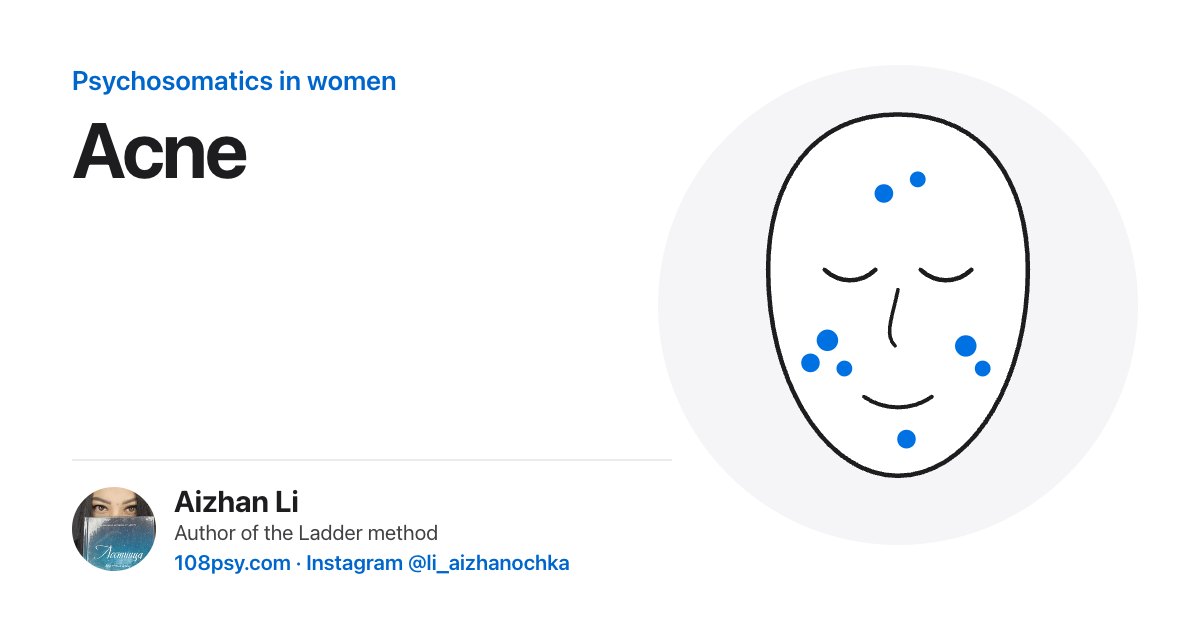
- Breakouts on the forehead, nose, chin, back and chest
- Breakouts get worse before your period
- Marks and scars after spots
A dermatologist chooses the treatment. See one if you have a lot of spots, they’re deep and painful, leave scars or bring your mood down. If your cycle is off, you also need a gynecologist.
Frequently asked questions
Can stress cause breakouts?
The American Academy of Dermatology lists stress among the causes of adult acne: in response to it, the body makes more androgens, and the oil glands work harder. But the main factors are still hormones and genes, as well as medicines and skin care. Psychosomatics looks at what exactly is getting to you.
What do breakouts mean in psychosomatics?
Acne is linked to how you look in other people’s eyes: you were compared, talked about, someone else was chosen. It’s important to see whose opinion of you still hurts so much.
Will my acne go away if I work through the psychosomatics?
No one can promise that. A dermatologist chooses the treatment, and if your cycle is off, a gynecologist or endocrinologist checks your hormones. Psychosomatics goes alongside: it helps you stop looking at yourself through other people’s eyes.
Sources
See what is holding you back.
In 10 minutes, the Ladder shows past events, other people’s words and your fears on one map.
Take the free diagnosticFree · 10 minutes · on your phoneRelated topics
Psychosomatics does not replace tests and treatment. Only a doctor can make a diagnosis.